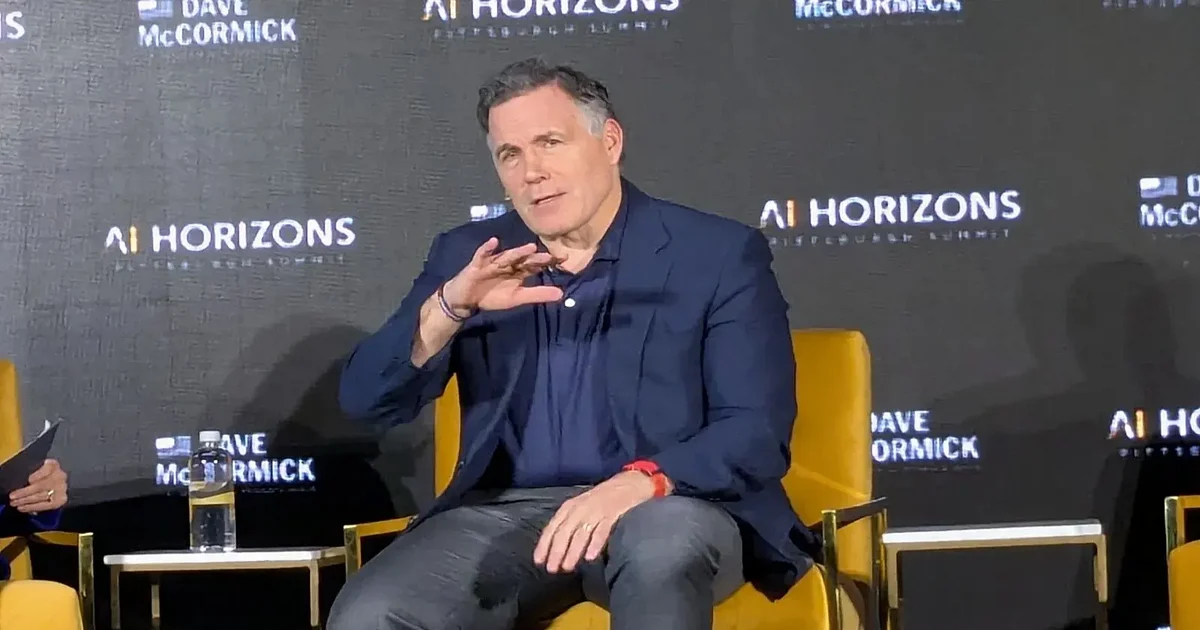
(The Center Square) – Just 24 hours after Gov. Josh Shapiro said raising the state’s minimum wage to $15 will be the first bill to reach his desk in 2027, Republican U.S. Sen. Dave McCormick shared his thoughts on how it will affect the commonwealth.
“I’ve generally been opposed to formally raising the minimum wage,” McCormick explained on a press call with Pennsylvania reporters on Thursday morning. “As a practical matter, the minimum wage that people make in Pennsylvania is already well above that because to be competitive, employers have to have higher wages.”
“But at that level, it’s something I’d be open-minded about,” he continued.
On Wednesday, Shapiro said that a bill to raise the state’s minimum wage to at least $15 an hour will be the first bill to reach his desk when the Democratic-controlled legislature convenes in January. It could impact 43,000 workers, according to the state Department of Labor and Industry.
“You will see the minimum wage bill reach my desk before I am sworn into a second term,” Shapiro told reporters in Pittsburgh during a news conference. “That’s how aggressive President Costa will be, and Speaker McClinton will be.”
On the campaign trail this year, Shapiro described it as a priority for a second term, while urging voters to support him and other Democratic candidates up and down the ballot.
Pennsylvania’s minimum wage was last raised in 2009, when the federal hourly rate was boosted to $7.25, where it still stands.
Shapiro has consistently signaled support for raising the wage, although it is unclear whether the bill will go higher than that amount or how it will be phased in.
All the states bordering Pennsylvania have wages above the federal minimum rate; however, the amounts vary by state.
McCormick acknowledged that fact in his response. However, he does differ from Shapiro and Democrats in terms of the impact it would have on Pennsylvanians.
“I think it’s not the main thing that’s going to help folks in Pennsylvania,” McCormick argued. “I don’t think that’s going to affect the income of working families.”
McCormick, instead, said he believes the main focus for lawmakers seeking to “change the landscape” is to bring down the prices of gas, housing, and healthcare.
“We got that message loud and clear in the election,” McCormick said, noting that Republicans had an unsuccessful midterm election. “So, the affordability thing is a real thing.”
“I think the voters made that really clear,” he continued.
McCormick, who has worked alongside Shapiro and President Donald Trump’s administration on energy and economic development projects in the state, said bringing new jobs and investment will have a greater impact than raising the minimum wage.
“So if I’m thinking, I wake up every morning saying, ‘What are the things I’m going to do to try to make opportunity happen for the folks across Pennsylvania,’” McCormick said. “Raising the minimum wage isn’t going to do much.”
“As I said, I’m not opposed to it, but I don’t think that’s where the focus should be,” he continued. “The focus should be bringing this investment. It’s an easy tagline, but bringing the investment to Pennsylvania and getting down prices, I think, are the things that are going to make the biggest difference for folks who are living paycheck to paycheck.”
McCormick’s comments appear to signal a change in his view of the issue. During his successful bid for office in 2024 over incumbent Democrat U.S. Sen. Bob Casey, the minimum wage didn’t feature in his campaign platform, while Casey touted being a co-sponsor of legislation to raise the federal minimum to $15.
U.S. Sen. John Fetterman, D-Pa., did not respond to a request for comment from The Center Square on the matter. However, he has advocated for raising the minimum wage to $15 or higher.
A few Republicans serving in Pennsylvania’s General Assembly have voted in support of raising the state’s minimum wage in recent years, although a majority of the caucus has opposed the effort.
This article was originally published by The Center Square and is republished under its open-access guidelines.