The Rightist

News, Conservative opinion, and a good-natured jab at the left.

The Center Square

  • Trump uses European riots as flashpoint ahead on campaign trail

    Trump uses European riots as flashpoint ahead on campaign trail

    (The Center Square) – With two weeks left until the midterm elections, President Donald Trump and his administration are hitting the campaign trail hard, shifting focus from some domestic issues to riots in Western Europe.

    The Center Square traveled with Trump to Wichita, Kan., on Monday as he crisscrosses the country, holding rallies in traditionally red states every night this week.

    With the days dwindling and polls showing tight races across the U.S., Trump iss warning attendees that a vote for Democrats could lead to an uprising in violence in the states.

    “If you want to see what is at stake in this election, just look at what’s happening in France, a once-great nation that is being conquered, looted and burned to the ground by migrants, jihadists, and communists who hate Christianity and Western civilization itself,” the president said during his rally in Park City, Kan., Monday evening.

    While many leaders in Europe are attributing the riots to education costs and the high cost of living, Trump and Republicans are pointing to years of unchecked migration in Western Europe.

    The president echoed earlier comments about France’s open border, claiming he had warned French President Emmanuel Macron to close it.

    Trump doubled down on his criticisms of Europe in a Truth Social post Monday night.

    He claimed that it is the Democratic “agenda” to “extinguish Western Civilization.”

    “They want to open the borders, shut down the power plants, set loose the criminals, turn your children transgender, confiscate your money, and raise up the Palestinian flag, while they defile the American flag,” Trump posted.

    Trump did hit on several domestic issues, including cutting taxes, securing the border, increasing domestic energy production and protecting children from “transgender mutilation.”

    At the Kansas rally, Trumpspoke in a packed, sweltering arena for more than 90 minutes, interrupted multiple times by protesters who were escorted from the rally. Trump claimed the protesters are “paid.”

    Joining Trump on the trip to Kansas was Agriculture Secretary Brooke Rollins, Sens. Eric Schmitt, R-Mo., and Roger Marshall, R-Kan.

    Trump used the event to stump for Marshall in a race for reelection against Democratic challenger Adam Hamilton, with polls showing a tightening race.

    In addition to Kansas, Trump plans to hold rallies in North Carolina, South Carolina, Iowa, Florida, Georgia and Michigan this week.

    This article was originally published by The Center Square and is republished under its open-access guidelines.

  • Democrats would end Trump’s tariffs. They haven’t said how.

    Democrats would end Trump’s tariffs. They haven’t said how.

    (The Center Square) – U.S. House Democrats say they would undo President Donald Trump’s tariffs. They have not said what would replace the revenue, and they have not addressed the Section 301 tariffs now hitting 60 trading partners.

    The Committee for a Responsible Federal Budget, a nonpartisan fiscal watchdog, estimates repealing the remaining tariffs would cost the federal government about $85.5 billion a year in lost revenue, or $245 per person.

    Asked on ABC’s “This Week” on Sept. 13 what Democrats would do on day one about the cost of living, Democratic Leader Hakeem Jeffries, D-N.Y., said, “We have to end the Trump tariffs, because we know the Trump tariffs have increased costs on everyday Americans by thousands of dollars per year.”

    Democrats have introduced bills aimed at the authorities Trump has used, but they have not identified legislation addressing the Section 301 tariffs, which the Office of the U.S. Trade Representative describes as covering 60 economies.

    “Discussions on how to address the administration’s clear abuses of 301 authority are ongoing,” said Nick Martin, a spokesman for U.S. Rep. Suzan DelBene, D-Wash., who chairs the Democratic Congressional Campaign Committee and sits on the Ways and Means trade subcommittee.

    The bills Democrats have written target the other authorities. Rep. Don Beyer, D-Va., introduced a measure in March 2025, before most of the tariffs took effect, requiring Congress to vote on presidential tariff actions under Section 232, the authority Trump used on autos and metals.

    Rep. Linda Sánchez, D-Calif., the top Democrat on the Ways and Means trade subcommittee, introduced a bill a month later terminating executive orders the Supreme Court would later void. Rep. Jimmy Panetta, D-Calif., introduced a bipartisan measure in April 2026 with Rep. Don Bacon, R-Neb., targeting a Section 122 tariff that expired in July 2026. Rep. Brad Schneider, D-Ill., introduced a bill in August 2026 to repeal Section 338 and refund duties collected under it.

    Net customs duties totaled $173.2 billion in fiscal 2026, down from $194.9 billion the year before, according to the Treasury Department’s monthly statement. The government collected $317.8 billion and returned $144.6 billion to importers after the Supreme Court struck down the earlier tariffs in February 2026.

    Asked what would replace the revenue, Martin did not name a source.

    “Much of the increased customs revenue is a result of President Trump’s tariff abuses and was not revenue the Treasury was entitled to without proper congressional authority,” he told The Center Square.

    The Congressional Budget Office has not published an estimate of what repealing the tariffs would cost, said Caitlin Emma, the agency’s chief of media relations.

    Bacon, who introduced the bill with Panetta, did not answer questions Monday by deadline due to district events, his office said.

    In an April statement announcing the measure, he said the Constitution “gives Congress authority over tariffs and trade, and it’s time Congress stands on its own two feet and does its job.” He said the bill was “a step toward restoring Congress’s role” and that across-the-board tariffs “raise costs for families and create unnecessary economic uncertainty.”

    The offices of Sánchez and Rep. Richard Neal, D-Mass., the top Democrat on the Ways and Means Committee, did not respond to questions.

    Jeffries has said the tariffs cost Americans thousands of dollars a year. Outside estimates are lower. The Tax Foundation puts the average household burden at about $820 this year, and the Budget Lab at Yale at about $1,100 in an Aug. 24 report. Both are modeled estimates of what households pay, not measures of federal revenue.

    Congress returns Nov. 9. Election Day is Nov. 3.

    This article was originally published by The Center Square and is republished under its open-access guidelines.

  • Republicans tout immigration enforcement record ahead of midterms

    Republicans tout immigration enforcement record ahead of midterms

    (The Center Square) – With over two dozen states having begun early voting, a group of U.S. House Republicans is highlighting the party’s immigration policy wins since the second Trump administration took office.

    U.S. Reps. Josh Brecheen, R-Okla., and David Rouzer, R-N.C., touted the 95% reduction in illegal border crossings during the second Trump administration, which has also overseen the deportation or self-removal of more than 2 million migrants who had illegally lived in the U.S.

    “The Biden-Harris administration wreaked havoc on our country with their reckless open border policies. And the worst part has been watching Biden tie the hands of law enforcement, leaving our communities to deal with the consequences,” Brecheen said on the Republican Study Committee’s newest podcast episode, first shared with The Center Square.

    “Their catch and release policies put lives at risk. Illegal aliens released into the country under the previous administration, they were committing these heinous crimes,” Brecheen added. “Innocent Americans that were the victims of this – Laken Riley, Rachel Morin, Jocelyn Nungaray, and many others.”

    During the former Biden administration, more than 14 million illegal entries were reported nationwide, The Center Square exclusively reported, including two million “gotaways,” those who entered between ports of entry and evaded capture.

    The Biden administration also allowed at least two million migrants who illegally crossed the U.S. border to claim asylum – without having to provide evidence of eligibility – and released them into the country on parole, The Center Square reported.

    Likely thousands of those parolees obtained Commercial Drivers Licenses to drive 18-wheelers, a 2025 report from Overdrive found, calculating that 60,000 non-domiciled CDLs were active at the time. Nondomiciled CDL drivers caused at least 17 fatal crashes and 30 deaths in 2025, according to the Trump administration.

    “You want to know that everybody behind the rig, a big rig, is qualified and is a safe driver and knows what they’re doing,” Rouzer said. “This administration took the bull by the horns and they have implemented a number of administrative rules and new processes to ensure that only those who deserve to be driving a big rig are the ones driving the big rigs.”

    According to President Donald Trump, since 2025 the DOT has forced states to cancel at least 28,000 CDLs to immigrants illegally residing in the country.

    Republicans, Brecheen said, “are working hard to reverse the radicalization of these rules and laws and these policies that have created such havoc.”

    “And, of course, with every election, the American people have a choice,” Rouzer added. “Do they want to go back to wide open borders like we were right, or do they want safety and security? And I think I know the answer to that.”

    Democrats have criticized the implementation of the Trump administration immigration enforcement policies – particularly the conduct of federal immigration enforcement agents and the detention of migrants who illegally entered the U.S. but had no other criminal convictions.

    Senate Democrats even triggered the longest partial government shutdown in U.S. history in 2026, lasting from Feb. 14 to April 30, over demands that Republicans implement dozens of reforms to federal immigration enforcement operations. The government eventually reopened, without Republicans instituting the proposed restrictions.

    This article was originally published by The Center Square and is republished under its open-access guidelines.

  • Flight restrictions at southwest border as cartel drone incursions continue

    Flight restrictions at southwest border as cartel drone incursions continue

    (The Center Square) – As Mexican cartel drone incursions continue at the southwest border, federal agencies have implemented a temporary flight restriction (TFR) for all drone operators in the region.

    The departments of Transportation, War and Homeland Security implemented a TFR to coordinate efforts to strengthen airspace security, reduce risks to ongoing border security operations, protect federal personnel and facilities and enhance enforcement against violators, the agencies said.

    The TFR, now in effect, bars any unauthorized drone activity up to 400 feet above ground level and extends one nautical mile north of the U.S.-Mexico border. 

    “The United States government will maintain 100% operational control of our border: land, air, and sea,” Secretary of War Pete Hegseth said. “For too long, cartels have taken advantage of gaps along our southern border. Thanks to President Donald J. Trump, those days are over. By restricting unauthorized drone activity, we are giving commanders greater awareness, greater decision space, and more options to defend the Homeland. Equipped with cutting-edge technology — including Directed Energy Weapons — our warfighters will shoot down any cartel drone that threatens America’s sovereignty.”

    The TFR became effective over the weekend, with the FAA still posting NOTAMs (Notice to Airmen) on Monday. The restriction remains in effect for one year. 

    NOTAMs are notices the FAA files to alert aircraft pilots of potential hazards along flight routes, and in this case, at the southwest border that would affect flights.  

    One NOTAM filed on Monday for the El Paso International Airport and its surrounding region states that drone usage is restricted to “an area defined as 0.5 nautical miles radius of 31°49’14″N 106°21’26″W (1.4 nautical miles northeast of ELP) surface to 150 ft above ground level,” CWSI explains. 

    Other NOTAMs issued for El Paso earlier this month restrict drone usage between 1.5 nautical miles and 9.8 nautical miles in varying directions with specific coordinates from the surface to 400 feet above ground level, according to FAA NOTAM data.

    The TFR was issued after Mexican cartel drone use at the southwest border has been a problem for years. 

    During the Biden administration, in 2022 and 2023, there were more than 10,000 drone incursions flown by Mexican cartels operating in Mexico and in the Rio Grande Valley of south Texas alone, The Center Square reported. The cartels are using the drones to identify where state and federal law enforcement officers are located to avoid or target them to engage in criminal activity, Border Patrol agents have found.

    More recently, cartel drone usage in El Paso has become so bad that local law enforcement called on the state legislature for help. El Paso Police Department Sgt. Cory Balke recently testified at a state Senate Committee on Homeland Security and Border Security hearing that cartel drone threats are organized and dangerous, The Center Square reported.

    “Primarily where we’re seeing [increased drone activity] in Ciudad Juarez, is very organized,” he said, referring to the Mexican city located directly across the Rio Grande River from El Paso. “The threat is very high, and they are very capable.”

    State Sen. Phil King, R-Weatherford, who chairs the committee, said, “Criminal organizations and hostile actors are using drones to conduct surveillance, transport contraband, and threaten critical infrastructure and public safety” and the legislature is taking action to address it. 

    Fast forward to nearly two months later and cartels in Mexico fired on U.S. Coast Guard crew in the Rio Grande Valley. The Trump administration deployed hundreds of National Guard troops to the region, including the latest deployment of two groups from New York to south Texas, The Center Square reported. 

    Not soon after their deployment, and two months after the Texas legislative hearing, the TFR drone restriction was implemented.

    The FAA has instructed drone operators to review all applicable NOTAMs and regulations to ensure compliance. Failure to comply can result in fines of up to $75,000 and license revocation. 

    The FBI is arresting drone violators and the DOJ is prosecuting them, including illegal foreign nationals, The Center Square reported.

    The TFR was put in place as part of the Trump administration’s ongoing efforts to secure the southwest border. After millions of people illegally entered during the Biden administration, an historic reversal was achieved this past year. 

    Illegal border crossings at the southwest border reached their lowest level in U.S. history over the past fiscal year, with apprehensions dropping by 95 percent, The Center Square reported.

    This article was originally published by The Center Square and is republished under its open-access guidelines.

  • Poll: Majority of voters say their household finances worse off than year ago

    Poll: Majority of voters say their household finances worse off than year ago

    (The Center Square) – Seven in 10 American voters say their household financial situation is worse off than a year ago, a new national poll found. Just one in 10 said their income outpaced their expenses.

    The Center Square Voters’ Voice Poll found 15% of registered voters said their income decreased over the past year. Another 41% said their income held steady while their expenses increased, and 15% said their income grew but their expenses grew faster. Fifteen percent said income and expenses rose at about the same rate. Ten percent came out ahead, and 3% weren’t sure.

    Some federal data tracks with what voters describe. Consumer prices rose 3.4% over the 12 months ending in August, while real average hourly earnings fell 0.3% over the same period, according to the Bureau of Labor Statistics. An hour of work bought less than it did a year earlier. Weekly paychecks held about even, up 0.3% after inflation, but only because the average workweek grew 0.6%.

    The Center Square Voters’ Voice Poll was conducted by Noble Predictive Insights from Oct. 5-7, surveying 2,527 registered U.S. voters. The margin of error is plus or minus 1.95 percentage points when all of those surveyed are included in the numbers. Subsets of data by income group have a higher margin of error.

    The squeeze is uneven. Among voters earning less than $50,000 a year, 22% said their income decreased, more than three times the 6% among voters earning more than $100,000, with the middle bracket at 11%. At the top of the scale the pattern reverses: 17% of voters earning more than $100,000 said their income outpaced their expenses, against 6% of voters earning less than $50,000.

    Other measures find more stability. The Federal Reserve’s Survey of Household Economics and Decisionmaking, published in May 2026, found 73% of adults were doing OK financially or living comfortably near the end of 2025, a share that has held steady since 2022. The Fed asked about households’ current situation rather than how it changed over the year. It also found the share doing OK or living comfortably fell among low-income and younger adults, and reported that price increases remained the most common financial concern.

    Orphe Divounguy, founder and chief economist of Quantitative Research Group and a former Zillow economist, said the pattern broadly matches the aggregate data and that a national average can conceal what the poll captures.

    “Given recent price increases, workers have lost purchasing power,” he told The Center Square.

    The economy can grow while households tread water, he said, because spending has outpaced disposable income and households are saving a smaller share of what they earn.

    Lower-income households have less room to absorb higher bills, Divounguy said, because they have less saved and are less likely to hold large stock portfolios. He pointed to the Fed survey, which found 19% of adults earning under $25,000 often or always had money left at month-end, compared with 59% of those earning at least $100,000. Those brackets don’t match the poll’s, he said, but they show the difference in financial cushions.

    Energy has been the clearest shock. Gasoline prices rose 27.4% over the 12 months ending in August and energy costs overall rose 16.3%, according to BLS. Electricity was up 3.8% over the same period and groceries 2.2%, BLS reported.

    Housing is the other recurring cost. Renter cost burdens hit a record in 2024, with 22.7 million households, or 49% of renters, spending more than 30% of income on rent and utilities, according to Harvard’s Joint Center for Housing Studies. The median renter earning less than $30,000 had $210 left each month after paying rent and utilities, down 60% since 2001 in inflation-adjusted terms.

    Asked about the poll’s findings, the White House pointed to the president’s economic record.

    “President Trump’s aggressive, pro-growth economic agenda has stopped Biden’s inflation crisis, driven economic growth, and created private-sector jobs and will continue to deliver economic wins over the next two years,” White House spokeswoman Taylor Rogers told The Center Square.

    Rogers cited the 2025 tax cuts, lower prescription drug costs, $90 Medicare checks and $500 Obamacare refund checks, more than a million private-sector jobs created, nearly 20 trade deals and record 401(k) balances. The Medicare rebate, reaching 20.8 million beneficiaries this month, comes from a fund Congress created in 2008, and the Obamacare refunds draw on a surplus of exchange user fees. Rogers did not address what the administration says to households reporting flat or falling income.

    Divounguy said slower inflation will not undo what households have already absorbed.

    “Slower inflation would mean those bills rise more slowly,” he said. “It does not reverse earlier price increases. Families need income to outpace their own expenses to regain financial breathing room.”

    This article was originally published by The Center Square and is republished under its open-access guidelines.

  • Border security efforts ongoing, New York National Guard mobilized to Texas

    Border security efforts ongoing, New York National Guard mobilized to Texas

    (The Center Square) – Trump administration’s border security efforts are ongoing, including sending more National Guard troops to the southwest border. 

    The most recent to be sent to Texas are from New York, the administration announced Friday. 

    Last week, 120 New York Army National Guard soldiers assigned to the 204th Engineer Battalion were sent to Texas to participate in a federal mission, Operation Ardent Vanguard. Mobilization ceremonies were held at the armory in Binghamton, New York, including families of the Forward Support Company participating in an official send-off on Oct. 11.

    The ceremonies marked the beginning of a yearlong mobilization to Texas in support of U.S. Border Patrol. 

    U.S. Army soldiers in both companies have spent 12 months preparing for the deployment. 

    The Headquarters and Headquarters Company will provide mission command for an Army task force operating in the region, led by Army Lt. Col. Kevin O’Reilly, battalion commander. 

    Speaking to the soldiers and their families, O’Reilly said the Binghamton-based National Guard units have a history of service dating to the Civil War. 

    He connected this legacy of service to their mission in Texas to support national security efforts along the border. 

    “This is a long mission; stressors will come up on mission and at home,” he said. “Look to your left and right. We are a team, and we are going to help each other.”  

    He also urged them to support each other as a team. “Don’t internalize and think you are alone,” he said. “I charge you to look out for each other. No matter what we face, we will overcome.”  

    They were deployed to the Texas-Mexico border after roughly 400 National Guard troops were deployed to the Rio Grande Valley in Texas after U.S. Coast Guard crew were fired on by cartel operatives earlier this month, The Center Square reported. 

    More than 20,000 troops have been deployed to the southwest border after President Donald Trump declared an invasion at the southwest border on his first day in office. He also implemented a series of directives, including directing the U.S. military to secure U.S. borders. This included directing U.S. Northern Command (NORTHCOM) to oversee border security and strategic planning to implement territorial integrity and deploying federal personnel, including the National Guard, to take operational control of the southern border, The Center Square reported.

    Trump declared an invasion after 55 Texas counties were the first and only ones to declare an invasion in the U.S., changing the national conversation, The Center Square exclusively reported. A majority of voters polled believe the U.S. was being invaded under the Biden administration. 

    At the height of the border crisis, 24 governors sent National Guard troops and other resources to Texas to support Gov. Greg Abbott’s border security mission, Operation Lone Star, The Center Square reported. “While the federal government has abdicated its duties, Republican governors stand ready to protect the U.S.-Mexico border and keep families safe,” they said in a joint statement at the time. “Texas Governor Greg Abbott has exemplified leadership at a critical time, leading the way with Operation Lone Star, and deploying the Texas Tactical Border Force to prevent illegal crossings and keep the border secure.”

    At the same time, the Biden administration sued Texas to thwart border security efforts, losing nearly all cases, The Center Square reported.

    Through the Trump administration’s Operation Ardent Vanguard, NORTHCOM is supporting border security efforts being implemented by the U.S.  Department of Homeland Security and U.S. Customs and Border Protection. This includes “border defense, detection, monitoring and infrastructure support,” the DOW said. The Forward Support Company is providing logistics support, including maintenance, fuel transportation, supplies and materials to the 204th Engineer Battalion.

    This article was originally published by The Center Square and is republished under its open-access guidelines.
  • Poll: Inflation tops voter concerns, national debt near the bottom

    Poll: Inflation tops voter concerns, national debt near the bottom

    (The Center Square) – Inflation ranks among the top three issues for 46% of registered voters, a nine-point climb since March, while the national debt and government spending sit near the bottom at 13%.

    Voters put the debt near the bottom in a year the federal government ran a $2 trillion deficit, $218 billion more than in fiscal 2025, the Congressional Budget Office estimates. The government spent $1.052 trillion on net interest on the debt in fiscal 2026, more than the $965 billion it spent on national defense and 14% of all federal spending, according to the Treasury Department’s monthly statement released Friday. Gross interest on Treasury securities, which includes interest the government pays itself, was $1.36 trillion. The net figure works out to about $6,462 for each of the 162.8 million individual income tax returns the IRS processed in fiscal 2025, according to the IRS Data Book.

    The Center Square’s Voters’ Voice Poll, conducted by Noble Predictive Insights Oct. 5-7, surveyed 2,527 registered voters nationally through an opt-in online panel and text-to-web cell phone messages. The pollster reports a margin of error of plus or minus 1.95 percentage points. Voters were asked to pick their top three issues from a list of 21.

    Inflation led at 46%, up from 41% in an Aug. 12-16 survey of 2,533 voters and 37% in a March 2-5 survey that offered 19 options rather than 21. The economy and jobs followed at 31%, healthcare at 28% and government corruption at 25%.

    Inflation was the top issue for every group in the survey. It ranked first among Democrats and Democratic-leaning voters at 47%, Republicans and Republican-leaning voters at 45% and true independents at 48%, the pollster’s term for voters who say they lean toward neither party. Nothing else came close to that agreement. Illegal immigration split 30% among Republicans and leaners to 6% among Democrats and leaners. National security split 23% to 7%.

    Karlyn Bowman, a distinguished senior fellow emeritus at the American Enterprise Institute who has studied public opinion since the 1970s, said in an email that the pattern is a common one.

    “Price levels/increases are immediate. We all feel them,” she said. “Issues such as the government debt are more abstract. People don’t think about them in their daily lives.”

    The poll was in the field a week before the government confirmed prices were still climbing. Consumer prices rose 0.6% in September and 3.7% over the year, the Bureau of Labor Statistics reported Wednesday, up from 3.4% in August. Gasoline prices rose 9.1% in September alone and 34.2% over 12 months, accounting for more than half of the monthly increase. Grocery prices rose 1.8% over the year and restaurant prices 3.5%.

    Voters ranked inflation higher while the headline number held still. The most recent inflation reading was 3.4% when the August poll was in the field, July’s rate, and 3.4% again when the October poll was conducted, August’s rate. Inflation gained five points as a top-three issue between the two.

    Charles Franklin, director of the Marquette Law School Poll, whose September survey of Wisconsin voters found inflation and the cost of living the single most important issue for 45% of respondents, said the goods driving the increase are the ones people buy most often.

    “Both are at least weekly purchases and people feel that directly, as opposed to rent or insurance costs which may rise once a year or so,” he said of gasoline and groceries. He pointed as well to cumulative increases since 2021: “There is still sticker shock at home or auto prices and in how much a family pays at the checkout for three or four bags of groceries, compared to what they remember paying 6 or so years ago.”

    The fiscal issues ranked at the bottom. High taxes drew 16%, tariffs and international trade 14%, the national debt and government spending 13% and fraud 7%. The debt has not moved as a top three issue: it drew 14% of respondents in March, 14% in August and 13% in October, while inflation climbed nine points over the same period. It also drew about the same share from every group, 14% among Republicans and leaners, 13% among Democrats and leaners and 15% among true independents.

    Franklin said that is unlikely to change on its own.

    “Debt seldom gets attention, and then not for very long,” he said. “In the current political environment neither the president nor members of Congress are taking up the debt issue or providing leadership on the issue.” He cited the 2010 Simpson-Bowles commission as the last serious bipartisan attempt at budget reform, and said it failed to win much legislative support. When voters are focused on the cost of living, he said, “it is very hard [for] the debt, or the annual deficit, to get any traction, and certainly not without presidential and congressional leadership on the issue.”

    Both parties have noticed. Franklin said Republicans and Democrats alike are running ads about grocery prices.

    “Both parties say they will ‘fix’ the problem,” he said. “They are all quite vague as to how they will fix it.”

    Voters go to the polls Nov. 3.

    This article was originally published by The Center Square and is republished under its open-access guidelines.

  • End-of-week reports show price pressures across US economy

    End-of-week reports show price pressures across US economy

    (The Center Square) – Following Wednesday’s news that inflation remained elevated in September, economic reports released Thursday and Friday offered a look at rising prices across the U.S. economy.

    Import prices, export prices, and prices charged by American producers all recorded their largest annual increases since 2022.

    Rising import prices can increase the cost of raw materials and finished products that American businesses purchase from overseas. Import prices tracked by the Bureau of Labor Statistics’ report do not include tariffs, though tariffs can still impact what exporters charge.

    Import prices rose 1.1% from August to September and 8.1% from a year earlier — the largest 12-month increase since July 2022, when prices had risen by 8.8% over the previous year. The monthly increase was driven by higher prices for both fuel and nonfuel imports, with fuel prices rising much more sharply.

    “Fuel is driving roughly 40% of September’s import price surge,” said Orphe Divounguy, founder of the Quantitative Research Group and former senior economist at Zillow.

    Fuel import prices jumped 4.8% after declining in July and August, while nonfuel import prices rose 0.7%. From September 2025 to September 2026, fuel import prices increased 34.5%, including a 35.4% rise in petroleum and petroleum product prices and a 96.5% jump in natural gas prices — the largest annual increase for imported natural gas since June 2022.

    Brent crude oil prices averaged roughly $114 per barrel in September, up from about $91 in August, while U.S. retail gasoline prices climbed to an average of $4.35 per gallon, according to the Energy Information Administration. 

    Nonfuel import prices also recorded their largest annual increase since April 2022, though the cost of producing those goods can still be affected by energy prices.

    Export prices rose 2.2% in September and 11.6% from a year earlier, their largest annual increase since July 2022. Higher export prices can boost revenue for American businesses selling overseas, but may also make their goods less competitive. 

    The Producer Price Index, which measures prices charged by U.S. businesses for goods and services, rose 1.3% in September — the largest monthly increase since March 2022. Prices were also up 6.3% from a year earlier, the largest annual increase since December 2022.

    Higher import prices can push up costs for American producers, which may pass those increases along to customers.

    Energy accounted for even more of the producer price increase than the rise in import costs, according to Divounguy.

    “My analysis estimates that energy accounted for about half the increase, while transportation and wholesale and retail margins added another third,” Divounguy said.

    Businesses in the New York-Northern New Jersey region also reported weakening economic conditions in the Federal Reserve Bank of New York’s October Business Leaders Survey.

    The survey’s business activity index fell 12 points to -20.7, its lowest level since March. Forty-two percent of respondents said business conditions worsened during the month, compared with 22% who reported improvement. Employment held steady, but businesses became more pessimistic about the next six months, with an index measuring expectations for future activity falling into negative territory for the first time since December 2025.

    Despite the decline in business activity, firms reported raising their selling prices at the fastest pace since 2022.

    About 71% of firms reported paying higher prices, while only 40% reported charging customers more, which Divounguy noted suggests some businesses may be absorbing part of their rising costs rather than passing them along to customers, though the survey cannot determine how much.

    The Federal Reserve’s interest rate-setting committee is scheduled to meet at the end of October to decide whether to raise, lower or hold rates steady. The Fed raised its benchmark interest rate by a quarter percentage point in September, to a range of 3.75% to 4%, as part of its effort to bring inflation down.

    “I still favor holding rates in October, but it’s a closer call,” Divounguy said. “The risk is that these cost increases keep spreading and people begin expecting inflation to stay higher for longer.”

    This article was originally published by The Center Square and is republished under its open-access guidelines.

  • Southwest illegal border crossing reach lowest level for one year in U.S. history

    Southwest illegal border crossing reach lowest level for one year in U.S. history

    (The Center Square) – Illegal border crossings at the southwest border reached their lowest level in U.S. history over the past fiscal year, according to U.S. Customs and Border Protection preliminary fiscal 2026 data.

    Southwest border apprehensions dropped by 95% from Oct. 1, 2025, through Sept. 30, 2026, CBP said. 

    CBP made the announcement on Saturday without publishing the data for the month of September. An estimate by The Center Square puts September nationwide encounters and apprehensions at close to 30,000. Every month, this number has hovered between 30,000 and 34,000, with the exception of February, according to CBP data.

    Southwest apprehension totals hovered between 9,000 and 12,000 over the past fiscal year. At the northern border, they fluctuated between 3,500 and 6,500, according to CBP data. 

    Over the past fiscal year through Aug. 31, nearly 350,000 had been apprehended nationwide, The Center Square reported.  

    The total number of apprehensions is down from 3.2 million reported in 2023, the highest on record, according to CBP data. 

    The Trump administration again claimed fiscal 2026 is “the first-ever fiscal year with zero Border Patrol releases. September marked the 17th consecutive month with ZERO releases.”

    According to federal policy, unaccompanied alien children (UACs) are consistently released into the country, including to so-called sponsors. In fiscal 2026, 8,348 UACs were reported nationwide, according to CBP data through Aug. 31. The majority, 7,608, were at the southwest border, according to the data.

    “FY 2026 demonstrated what focused enforcement, strong partnerships, and the commitment of our frontline personnel can achieve,” CBP Commissioner Rodney Scott said in a statement. “DHS and CBP are securing the border, stopping dangerous drugs and criminals, protecting communities, and ensuring our personnel have the resources necessary for this critical mission.”

    CBP says its “enforcement posture” drove Border Patrol apprehensions to their lowest level in agency history of less than 99,000. It is referring to southwest border apprehensions between ports of entry. When apprehensions at ports of entry are included, the number is higher. Total apprehensions at the southwest border through Aug. 31 were 128,000, according to CBP data. 

    According to CBP’s Saturday announcement, CBP preliminary data shows total nationwide encounters in fiscal 2026 were the lowest in agency history at 379,243, compared to the 2.7 million per year reported under the Biden administration. This puts fiscal 2026 encounters at 88% lower than those during fiscal 2023, a year with the most encounters reported in U.S. history. 

    Neither the Biden nor Trump administrations publicly release gotaway data to disclose how many foreign nationals illegally enter between ports of entry to intentionally evade capture. Under the Biden administration, more than 2 million gotaways were reported, according to data exclusively reported by The Center Square after obtaining it from Border Patrol agents. 

    Gotaways are still coming through under the Trump administration. In Texas, they are being apprehended by Texas Operation Lone Star border security law enforcement working with Border Patrol. Federal troops are also at the southwest border responding to cartel shootings and supporting CBP and Border Patrol efforts, The Center Square reported.

    The 95% drop at the southwest border reflects “sustained enforcement and the deterrent effect of a secure border. Illegal aliens have received a clear message: don’t try to enter the country illegally, or you will be apprehended, detained, and deported,” CBP said. These policies are also “saving lives by reducing unlawful crossings, leading to a dramatic decline in border-related deaths,” it added, without stating the number of deaths.

    At the same time, more Americans and noncitizens have been shot by U.S. Immigration and Customs Enforcement officers. Three shootings have occurred in Texas alone, leading to two deaths of Hispanic men, including one U.S. citizen. The second shooting in Houston prompted Gov. Greg Abbott to call for a state investigation. 

    ICE and Border Patrol agents have also been the target of violence, with assaults against ICE up by more than 1,700% nationwide, The Center Square reported. Federal agents in Texas have been a consistent target of high-profile shootings, bomb threats, white powder being mailed among other threats. In these cases, the shooters and those making bomb threats were killed or convicted of domestic terrorism.

    The administration has so far completed 250 miles of new border barrier construction along the southwest border since January 20, 2025. Through the “One Big Beautiful Bill,” CBP obligated $34.3 billion to support Smart Wall projects along the southwest border. Several billion of these funds were awarded to construction companies with a history of scandals, The Center Square reported.  

    The administration is also being sued over border wall construction in the Big Bend region of Texas. The case is before the U.S. Supreme Court after a federal judge halted construction.

    With more agents in the field, more drugs are being apprehended. According to preliminary CBP data, drug seizures in fiscal 2026 totaled a record nearly one million pounds, the agency said. This represents a 63% increase from the 600,000-pound annual average over the last four years.

    This article was originally published by The Center Square and is republished under its open-access guidelines.
  • Homan says investigators have ‘strong case’ against Ilhan Omar

    Homan says investigators have ‘strong case’ against Ilhan Omar

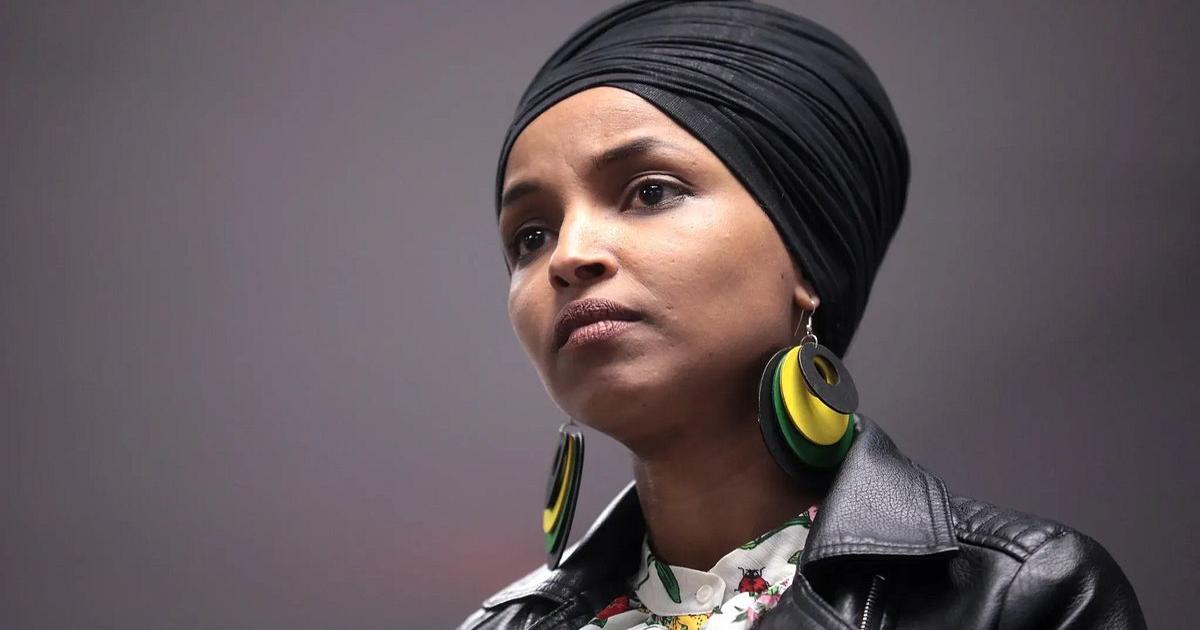
    (The Center Square) – White House border czar Tom Homan said over the weekend that federal investigators have a “strong case” against U.S. Rep. Ilhan Omar.

    These comments come less than a week after Homeland Security Investigations searched the Minnesota Democrat’s Washington, D.C., home. Reports have linked the search to an investigation into the circumstances surrounding her naturalization as a U.S. citizen.

    In an interview on Saturday, Homan addressed whether Omar could face legal consequences.

    “I’m not going to get ahead of the bureau,” Homan said. “We will let the evidence lead where it leads. But she will be held to the same standards you and I are held. If she violated law, then she will be held accountable.”

    When asked what the investigation is examining and whether it extends beyond potential immigration fraud, Homan said he “knows things” but directed the question to the FBI.

    The FBI did not respond to a request for comment from The Center Square.

    Over the weekend, former President Barack Obama joined the many Democrats and civil rights groups condemning the raid.

    “It is a basic principle of American democracy that the government can’t selectively target individuals simply because of their political beliefs or what they say,” Obama said in a social media post on Sunday. “But that’s exactly what the Trump Administration is doing to Congresswoman Ilhan Omar of Minnesota.”

    The Democrat called claims regarding Omar’s immigration status “unsubstantiated,” also stating that this investigation is because the Trump administration is “actively trying to deport” Omar.

    “The full weight of the federal government is being brought down on a law-abiding elected official because she has dared to criticize the president,” Obama said. “The fact that any president, or any administration, is willing to engage in such transparent efforts to intimidate someone should outrage all Americans.”

    Federal officials searched Omar’s home early Monday morning, according to a statement the U.S. Department of Justice provided The Center Square.

    “Homeland Security Investigations executed a judicially authorized search warrant secured by the Department of Justice,” said a spokesperson. “This enforcement action is part of an ongoing federal criminal investigation.”

    That same spokesperson declined to comment further on “investigations.”

    Attorneys for Omar have demanded that items—including her phone—taken during the raid be returned to the congresswoman, stating its seizure was “neither justified nor lawful,” according to reports. Members of her family are among more than a dozen people who have been subpoenaed by a grand jury.

    The raid came just a month after Homan confirmed that Omar is actively under investigation by DHS.

    Omar, who immigrated to the United States in 1995, has faced scrutiny for years over the circumstances surrounding her naturalization as a citizen.

    In September, Homan refused to reveal many details regarding the “ongoing criminal investigation,” besides that U.S. Immigration and Customs Enforcement are the ones conducting it.

    Since the raid, other federal officials have joined Homan in confirming the case is “strong,” adding that this is not a politically-motivated prosecution.

    “We try to let the law follow the facts, rather than creating facts just to prosecute people we don’t like,” Vance said last week. “I do know there are some serious allegations against Ilhan Omar . . . If there’s a real case there, we’re going to follow the facts.”

    The scrutiny includes longstanding allegations that Omar married her brother to facilitate immigration fraud. Omar denied the allegations in 2016, calling them “disgusting lies.”

    In December, Omar called an effort to examine records pertaining to her immigration “sick.”

    “I have no response because I don’t know what they’ll be investigating,” Omar told a reporter. She added that investigators would “absolutely not” find anything.

    According to federal officials, the investigation has been ongoing for some months.

    DHS Secretary Markwayne Mullin also discussed the issue in September, alleging that they’ve already determined that she married her brother.

    “Something’s going to happen,” Mullin said. “We know that she married her brother to try to bring him to the United States. We know he now lives in London.”

    Mullin also threw out the prospect of deportation, which would first require denaturalization.

    “There may be more to this, the whole family migration and possibly some illegal activity for them to come to the United States to begin with,” Mullin said. “If we can prove it, that you shouldn’t have been here in the first place, we will deport you.”

    Omar, who represents Minnesota’s 5th Congressional District, has served in Congress since 2019. She addressed the investigation last week.

    “Thank you to everyone who stood with me over the years,” Omar said in a post on her personal social media. “It’s been a scary journey but I have always been grounded in my work and ability to provide exemplary service to my constituents.”

    Omar added that she has felt targeted.

    “Trump and his administration have been after me since I arrived in Congress,” she said. “I have always stood up to him and that will never change. The pedophile protector will never silence me.”

    This article was originally published by The Center Square and is republished under its open-access guidelines.