The Rightist

News, Conservative opinion, and a good-natured jab at the left

?Leftist of the DayWho is it today? →

Your Paycheck

Jobs, inflation, groceries, gas, rent and wages: what hits your wallet.

  • Ground beef dips to $6.79 as tariff-free Brazilian beef pours in

    Ground beef dips to $6.79 as tariff-free Brazilian beef pours in

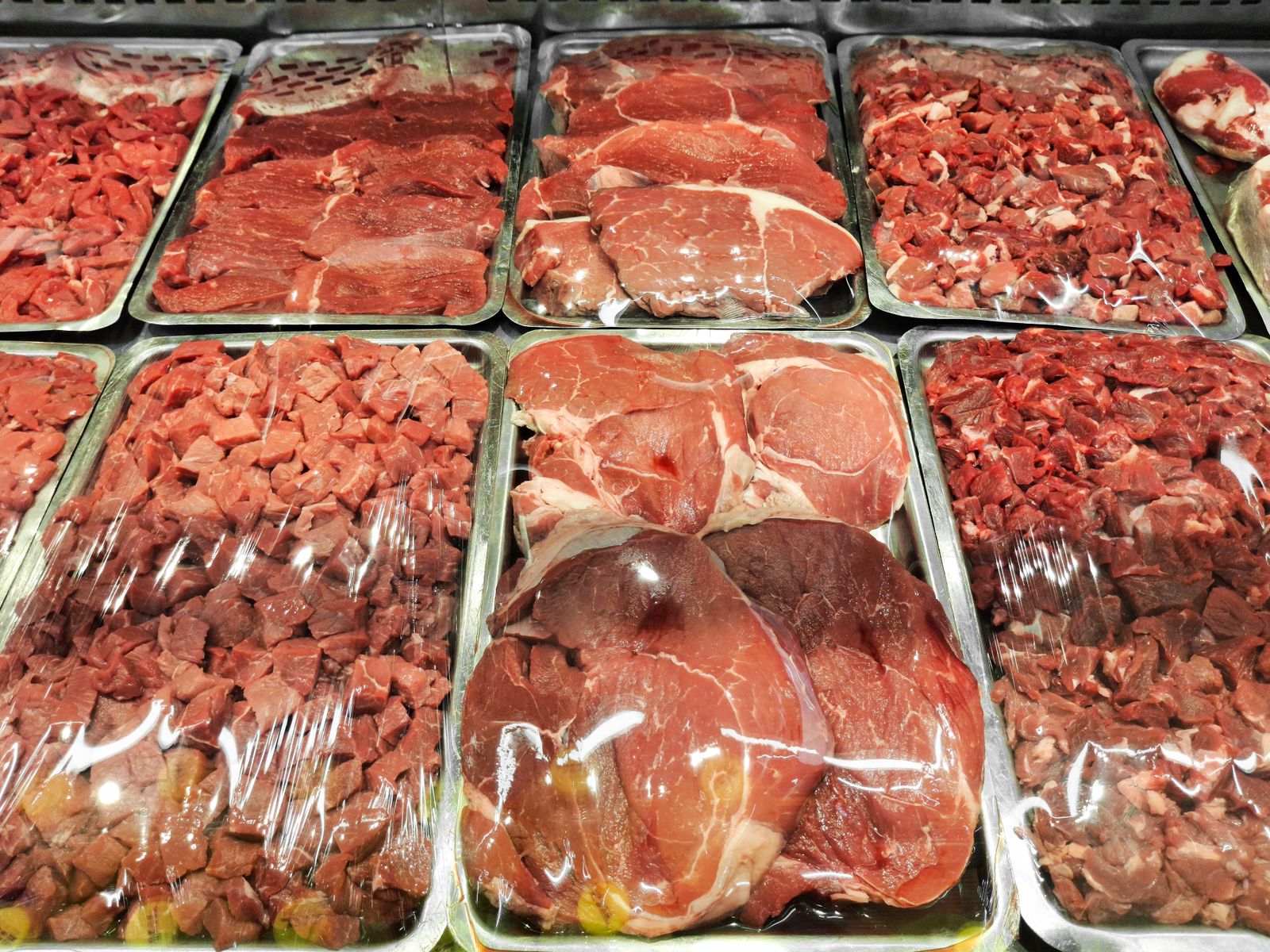
    Ground beef cost an average of $6.79 a pound in September, down from a record $6.92 in August, according to Bureau of Labor Statistics data released Oct. 14. It was the first monthly drop since May. The dip came in the first month of President Trump’s 90-day pause on tariffs for imported lean beef trimmings, a program that enters its final window this weekend as foreign shipments climb and U.S. ranchers object.

    The proclamation, signed Aug. 26, raised the 2026 tariff-free import quota for lean beef trimmings by 300,000 metric tons, released in three 100,000-ton tranches. The second tranche closes Friday, Oct. 30. The third opens Saturday, Oct. 31, and runs until it fills or until Nov. 30. The trimmings are blended with U.S. beef to make ground beef. The order says the imported product must be “sold at a price 25 percent below the market price for lean beef trimmings,” and the president can cancel what remains if it is not.

    Brazil has been the biggest beneficiary. Brazilian beef exports to the United States reached $263.5 million in September, up 524 percent from $42.2 million a year earlier, according to Comex Stat, the trade database of Brazil’s Ministry of Development, Industry, Trade and Services. By volume, shipments rose to 44,435 metric tons from 7,852 tons.

    The National Cattlemen’s Beef Association, the United States Cattlemen’s Association and the American Farm Bureau Federation opposed the pause when it was announced. Al Jazeera reported Sunday that cattle auction prices fell after the announcement. Republican Sens. Tim Sheehy of Montana and John Barrasso of Wyoming also criticized the move. The U.S. cattle herd stood at 86.2 million head on Jan. 1, down from 86.5 million a year earlier, according to the USDA’s National Agricultural Statistics Service.

    Beef is still well above last year. The September ground beef average was 7.4 percent higher than the $6.32 of September 2025. The broader beef index fell 1.0 percent in September, the BLS said, while grocery prices overall were up 1.8 percent over 12 months.

    Why it matters: Ground beef is the beef most households buy, and a 13-cent drop is the first relief in months. Whether the discount keeps showing up at the meat counter decides whether the tariff pause survives, since the order lets the president end it if prices do not fall. Ranchers say lower auction prices discourage rebuilding the herd, which is what keeps beef expensive in the first place.

    Sources: the White House proclamation, the BLS average price series for ground beef, the BLS September CPI release and the USDA Jan. 1 Cattle report.

  • Poll: More than half of Americans disapprove of Trump, economy

    Poll: More than half of Americans disapprove of Trump, economy

    (The Center Square) – More than half of Americans disapprove of President Donald Trump’s job performance, including his handling of the economy, according to a new poll.

    The Center Square Voters Voice Poll found that 55% of Americans disapprove of Trump’s overall job performance, with 45% saying they “strongly disapprove.” Separately, the poll found 58% of Americans disapprove of how Trump is handling the economy, with 46% of respondents who “strongly disapprove.”

    The Center Square Voters Voice Poll, conducted by Noble Predictive Insights, surveyed 2,527 registered voters from Oct. 5-7 via opt-in online panel and text-to-web cell phone messages. The sample included 1,136 Republicans, 1,171 Democrats and 220 True Independents, who did not lean toward either major party when asked.

    Ryan Bourne, chair for the Public Understanding of Economics at the Cato Institute, said the American public has associated the president’s handling of the economy with inflation since after the COVID-19 pandemic.

    “Inflation is now higher than when he entered office, compounding the accumulated effects of past inflation,” Bourne told The Center Square in an emailed statement. “Through tariffs, deportations, the Iran War, big deficits and pressure on the Fed to ease monetary policy, the administration has certainly contributed to that outcome.”

    Only 10% of respondents said they “somewhat disapprove” of Trump’s job performance. About 11% said they “somewhat disapprove” of his economic handling.

    The U.S. Bureau of Labor Statistics reported energy prices rose by 20.4% over the last year as the U.S. military conflict in Iran continues. The September inflation report showed annual core inflation increased by 0.3% in September for an increase of 2.6% over the year after August saw a 2.4% increase

    “Experts expect gasoline prices to decline gradually after October, but that outlook depends on easing disruptions to energy supplies,” Bourne told The Center Square. “More fundamentally, lasting affordability requires people’s incomes to grow faster than their living costs. Right now the opposite is happening.”

    Dissatisfaction with Trump’s job performance and handling of the economy also extended to Republicans and respondents who voted for him in 2024. About 26% of Republicans and Republican-leaning independents disapprove of Trump’s handling of the economy, while 23% of Trump voters said the same.

    “This dissatisfaction extends beyond his political opponents,” Bourne said.

    About 8% of respondents who voted for Trump said they “strongly disapprove” of his job performance, while 10% “strongly disapprove” of his handling of the economy.

    “Presidents have much less control over prices than campaign rhetoric suggests, of course, but Trump nevertheless invited voters to judge him against those promises, and they appear to be doing so, as evidenced by other polling that showed sharply declining net approval on his handling of inflation well before the Iran conflict,” Bourne said.

    About 43% of Republican voters “strongly approve” of Trump’s job performance and 38% said the same about his handling of the economy.

    Democratic voters made up the vast majority of those who did not approve of Trump’s job performance or economic capability as 87% and 86% disapprove, respectively.

    Outside of Democrats, Black respondents were also most likely to disapprove of Trump’s performance. About 72% of Black voters disapprove of Trump’s overall job performance, with 60% who strongly disapprove. The same percentages held up for Trump’s handling of the economy.

    With the 2026 midterm elections approaching, Republicans have appeared to distance themselves from Trump as his popularity dwindles. Independent voters, who often make up the determining factors in tight national elections, were also disappointed with Trump.

    About 68% of True Independent voters disapprove of Trump’s job performance, with 52% who “strongly disapprove.” At the same time, 71% of True Independent voters disapprove of Trump’s economic handling, while 53% “strongly disapprove.”

    “Incumbents always seem to suffer when voters are dissatisfied about living costs, so I expect these elections to be very tough for Republicans,” Bourne said.

    The White House did not respond to The Center Square’s request for a comment on the poll. 

    This article was originally published by The Center Square and is republished under its open-access guidelines.

  • Poll: Majority of voters say their household finances worse off than year ago

    Poll: Majority of voters say their household finances worse off than year ago

    (The Center Square) – Seven in 10 American voters say their household financial situation is worse off than a year ago, a new national poll found. Just one in 10 said their income outpaced their expenses.

    The Center Square Voters’ Voice Poll found 15% of registered voters said their income decreased over the past year. Another 41% said their income held steady while their expenses increased, and 15% said their income grew but their expenses grew faster. Fifteen percent said income and expenses rose at about the same rate. Ten percent came out ahead, and 3% weren’t sure.

    Some federal data tracks with what voters describe. Consumer prices rose 3.4% over the 12 months ending in August, while real average hourly earnings fell 0.3% over the same period, according to the Bureau of Labor Statistics. An hour of work bought less than it did a year earlier. Weekly paychecks held about even, up 0.3% after inflation, but only because the average workweek grew 0.6%.

    The Center Square Voters’ Voice Poll was conducted by Noble Predictive Insights from Oct. 5-7, surveying 2,527 registered U.S. voters. The margin of error is plus or minus 1.95 percentage points when all of those surveyed are included in the numbers. Subsets of data by income group have a higher margin of error.

    The squeeze is uneven. Among voters earning less than $50,000 a year, 22% said their income decreased, more than three times the 6% among voters earning more than $100,000, with the middle bracket at 11%. At the top of the scale the pattern reverses: 17% of voters earning more than $100,000 said their income outpaced their expenses, against 6% of voters earning less than $50,000.

    Other measures find more stability. The Federal Reserve’s Survey of Household Economics and Decisionmaking, published in May 2026, found 73% of adults were doing OK financially or living comfortably near the end of 2025, a share that has held steady since 2022. The Fed asked about households’ current situation rather than how it changed over the year. It also found the share doing OK or living comfortably fell among low-income and younger adults, and reported that price increases remained the most common financial concern.

    Orphe Divounguy, founder and chief economist of Quantitative Research Group and a former Zillow economist, said the pattern broadly matches the aggregate data and that a national average can conceal what the poll captures.

    “Given recent price increases, workers have lost purchasing power,” he told The Center Square.

    The economy can grow while households tread water, he said, because spending has outpaced disposable income and households are saving a smaller share of what they earn.

    Lower-income households have less room to absorb higher bills, Divounguy said, because they have less saved and are less likely to hold large stock portfolios. He pointed to the Fed survey, which found 19% of adults earning under $25,000 often or always had money left at month-end, compared with 59% of those earning at least $100,000. Those brackets don’t match the poll’s, he said, but they show the difference in financial cushions.

    Energy has been the clearest shock. Gasoline prices rose 27.4% over the 12 months ending in August and energy costs overall rose 16.3%, according to BLS. Electricity was up 3.8% over the same period and groceries 2.2%, BLS reported.

    Housing is the other recurring cost. Renter cost burdens hit a record in 2024, with 22.7 million households, or 49% of renters, spending more than 30% of income on rent and utilities, according to Harvard’s Joint Center for Housing Studies. The median renter earning less than $30,000 had $210 left each month after paying rent and utilities, down 60% since 2001 in inflation-adjusted terms.

    Asked about the poll’s findings, the White House pointed to the president’s economic record.

    “President Trump’s aggressive, pro-growth economic agenda has stopped Biden’s inflation crisis, driven economic growth, and created private-sector jobs and will continue to deliver economic wins over the next two years,” White House spokeswoman Taylor Rogers told The Center Square.

    Rogers cited the 2025 tax cuts, lower prescription drug costs, $90 Medicare checks and $500 Obamacare refund checks, more than a million private-sector jobs created, nearly 20 trade deals and record 401(k) balances. The Medicare rebate, reaching 20.8 million beneficiaries this month, comes from a fund Congress created in 2008, and the Obamacare refunds draw on a surplus of exchange user fees. Rogers did not address what the administration says to households reporting flat or falling income.

    Divounguy said slower inflation will not undo what households have already absorbed.

    “Slower inflation would mean those bills rise more slowly,” he said. “It does not reverse earlier price increases. Families need income to outpace their own expenses to regain financial breathing room.”

    This article was originally published by The Center Square and is republished under its open-access guidelines.

  • Poll: Inflation tops voter concerns, national debt near the bottom

    Poll: Inflation tops voter concerns, national debt near the bottom

    (The Center Square) – Inflation ranks among the top three issues for 46% of registered voters, a nine-point climb since March, while the national debt and government spending sit near the bottom at 13%.

    Voters put the debt near the bottom in a year the federal government ran a $2 trillion deficit, $218 billion more than in fiscal 2025, the Congressional Budget Office estimates. The government spent $1.052 trillion on net interest on the debt in fiscal 2026, more than the $965 billion it spent on national defense and 14% of all federal spending, according to the Treasury Department’s monthly statement released Friday. Gross interest on Treasury securities, which includes interest the government pays itself, was $1.36 trillion. The net figure works out to about $6,462 for each of the 162.8 million individual income tax returns the IRS processed in fiscal 2025, according to the IRS Data Book.

    The Center Square’s Voters’ Voice Poll, conducted by Noble Predictive Insights Oct. 5-7, surveyed 2,527 registered voters nationally through an opt-in online panel and text-to-web cell phone messages. The pollster reports a margin of error of plus or minus 1.95 percentage points. Voters were asked to pick their top three issues from a list of 21.

    Inflation led at 46%, up from 41% in an Aug. 12-16 survey of 2,533 voters and 37% in a March 2-5 survey that offered 19 options rather than 21. The economy and jobs followed at 31%, healthcare at 28% and government corruption at 25%.

    Inflation was the top issue for every group in the survey. It ranked first among Democrats and Democratic-leaning voters at 47%, Republicans and Republican-leaning voters at 45% and true independents at 48%, the pollster’s term for voters who say they lean toward neither party. Nothing else came close to that agreement. Illegal immigration split 30% among Republicans and leaners to 6% among Democrats and leaners. National security split 23% to 7%.

    Karlyn Bowman, a distinguished senior fellow emeritus at the American Enterprise Institute who has studied public opinion since the 1970s, said in an email that the pattern is a common one.

    “Price levels/increases are immediate. We all feel them,” she said. “Issues such as the government debt are more abstract. People don’t think about them in their daily lives.”

    The poll was in the field a week before the government confirmed prices were still climbing. Consumer prices rose 0.6% in September and 3.7% over the year, the Bureau of Labor Statistics reported Wednesday, up from 3.4% in August. Gasoline prices rose 9.1% in September alone and 34.2% over 12 months, accounting for more than half of the monthly increase. Grocery prices rose 1.8% over the year and restaurant prices 3.5%.

    Voters ranked inflation higher while the headline number held still. The most recent inflation reading was 3.4% when the August poll was in the field, July’s rate, and 3.4% again when the October poll was conducted, August’s rate. Inflation gained five points as a top-three issue between the two.

    Charles Franklin, director of the Marquette Law School Poll, whose September survey of Wisconsin voters found inflation and the cost of living the single most important issue for 45% of respondents, said the goods driving the increase are the ones people buy most often.

    “Both are at least weekly purchases and people feel that directly, as opposed to rent or insurance costs which may rise once a year or so,” he said of gasoline and groceries. He pointed as well to cumulative increases since 2021: “There is still sticker shock at home or auto prices and in how much a family pays at the checkout for three or four bags of groceries, compared to what they remember paying 6 or so years ago.”

    The fiscal issues ranked at the bottom. High taxes drew 16%, tariffs and international trade 14%, the national debt and government spending 13% and fraud 7%. The debt has not moved as a top three issue: it drew 14% of respondents in March, 14% in August and 13% in October, while inflation climbed nine points over the same period. It also drew about the same share from every group, 14% among Republicans and leaners, 13% among Democrats and leaners and 15% among true independents.

    Franklin said that is unlikely to change on its own.

    “Debt seldom gets attention, and then not for very long,” he said. “In the current political environment neither the president nor members of Congress are taking up the debt issue or providing leadership on the issue.” He cited the 2010 Simpson-Bowles commission as the last serious bipartisan attempt at budget reform, and said it failed to win much legislative support. When voters are focused on the cost of living, he said, “it is very hard [for] the debt, or the annual deficit, to get any traction, and certainly not without presidential and congressional leadership on the issue.”

    Both parties have noticed. Franklin said Republicans and Democrats alike are running ads about grocery prices.

    “Both parties say they will ‘fix’ the problem,” he said. “They are all quite vague as to how they will fix it.”

    Voters go to the polls Nov. 3.

    This article was originally published by The Center Square and is republished under its open-access guidelines.

  • End-of-week reports show price pressures across US economy

    End-of-week reports show price pressures across US economy

    (The Center Square) – Following Wednesday’s news that inflation remained elevated in September, economic reports released Thursday and Friday offered a look at rising prices across the U.S. economy.

    Import prices, export prices, and prices charged by American producers all recorded their largest annual increases since 2022.

    Rising import prices can increase the cost of raw materials and finished products that American businesses purchase from overseas. Import prices tracked by the Bureau of Labor Statistics’ report do not include tariffs, though tariffs can still impact what exporters charge.

    Import prices rose 1.1% from August to September and 8.1% from a year earlier — the largest 12-month increase since July 2022, when prices had risen by 8.8% over the previous year. The monthly increase was driven by higher prices for both fuel and nonfuel imports, with fuel prices rising much more sharply.

    “Fuel is driving roughly 40% of September’s import price surge,” said Orphe Divounguy, founder of the Quantitative Research Group and former senior economist at Zillow.

    Fuel import prices jumped 4.8% after declining in July and August, while nonfuel import prices rose 0.7%. From September 2025 to September 2026, fuel import prices increased 34.5%, including a 35.4% rise in petroleum and petroleum product prices and a 96.5% jump in natural gas prices — the largest annual increase for imported natural gas since June 2022.

    Brent crude oil prices averaged roughly $114 per barrel in September, up from about $91 in August, while U.S. retail gasoline prices climbed to an average of $4.35 per gallon, according to the Energy Information Administration. 

    Nonfuel import prices also recorded their largest annual increase since April 2022, though the cost of producing those goods can still be affected by energy prices.

    Export prices rose 2.2% in September and 11.6% from a year earlier, their largest annual increase since July 2022. Higher export prices can boost revenue for American businesses selling overseas, but may also make their goods less competitive. 

    The Producer Price Index, which measures prices charged by U.S. businesses for goods and services, rose 1.3% in September — the largest monthly increase since March 2022. Prices were also up 6.3% from a year earlier, the largest annual increase since December 2022.

    Higher import prices can push up costs for American producers, which may pass those increases along to customers.

    Energy accounted for even more of the producer price increase than the rise in import costs, according to Divounguy.

    “My analysis estimates that energy accounted for about half the increase, while transportation and wholesale and retail margins added another third,” Divounguy said.

    Businesses in the New York-Northern New Jersey region also reported weakening economic conditions in the Federal Reserve Bank of New York’s October Business Leaders Survey.

    The survey’s business activity index fell 12 points to -20.7, its lowest level since March. Forty-two percent of respondents said business conditions worsened during the month, compared with 22% who reported improvement. Employment held steady, but businesses became more pessimistic about the next six months, with an index measuring expectations for future activity falling into negative territory for the first time since December 2025.

    Despite the decline in business activity, firms reported raising their selling prices at the fastest pace since 2022.

    About 71% of firms reported paying higher prices, while only 40% reported charging customers more, which Divounguy noted suggests some businesses may be absorbing part of their rising costs rather than passing them along to customers, though the survey cannot determine how much.

    The Federal Reserve’s interest rate-setting committee is scheduled to meet at the end of October to decide whether to raise, lower or hold rates steady. The Fed raised its benchmark interest rate by a quarter percentage point in September, to a range of 3.75% to 4%, as part of its effort to bring inflation down.

    “I still favor holding rates in October, but it’s a closer call,” Divounguy said. “The risk is that these cost increases keep spreading and people begin expecting inflation to stay higher for longer.”

    This article was originally published by The Center Square and is republished under its open-access guidelines.