(The Center Square) – The first 100 days planned activities by Democrats in the U.S. House of Representatives would cost taxpayers $4.1 trillion through 2037 and add $4.9 trillion to the debt with interest, according to a new analysis from the Committee for a Responsible Federal Budget.
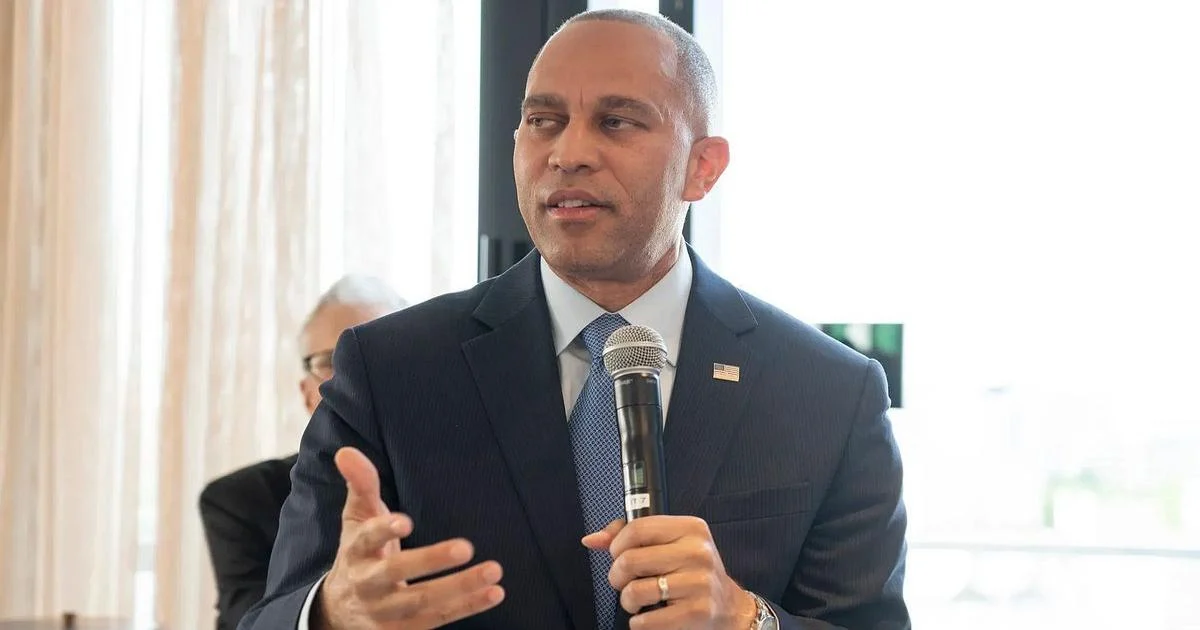
Democratic Leader Hakeem Jeffries, D-N.Y., Democratic nominee for speaker in the 120th Congress, laid out the agenda in a Nov. 4 letter to House Democrats. He wrote that in the first 100 days, House Democrats “must act to reverse the Medicaid cuts, restore SNAP funding, extend the Affordable Care Act tax credits, eradicate the Trump tariffs and stop the reckless war of choice in Iran.”
Chris Towner, the Committee for a Responsible Federal Budget’s policy director, told The Center Square the $1.6 trillion health estimate could be low. The figure comes from the Congressional Budget Office’s original score of the health provisions in the One Big Beautiful Bill Act, extended to 2037, and does not reflect what Towner said was a roughly 8% increase in projected Medicaid spending since then. He estimated the cost of reversing those provisions could reach $2 trillion.
The committee’s $4.1 trillion estimate includes $1.6 trillion to reverse the health provisions and $1.8 trillion in lost revenue from repealing the tariffs second-term Republican President Donald Trump has imposed since 2025. It puts another $405 billion on restoring the enhanced Affordable Care Act subsidies that expired last year and $250 billion on reversing the SNAP changes through 2037. Debt service adds $840 billion.
The Committee for a Responsible Federal Budget attached no cost to ending the war in Iran. The group said the fighting has been paid for out of existing funds, so stopping it produces no scoreable savings. Towner said the Congressional Budget Office estimated the war cost $38 billion from February through July and put the cost of each additional month at $2 billion to $3 billion. CRFB used that rate to project about $30 billion a year, or $300 billion over a decade, in borrowing that ending the war could avoid.
Towner said the Congressional Budget Office scored the provisions when Republicans passed them last year but has not scored reversing them. The Committee for a Responsible Federal Budget built its estimate by taking those original scores and extending them to 2037.
Towner said he expects the Congressional Budget Office to score the agenda if Congress votes on it, and that the next Congress’ budget committee leaders will ask for one.
Towner’s group said the agenda should be offset, and that Democrats are debating whether to do so. Democratic leaders have not said how they would pay for it. Rep. Richard Neal, D-Mass., in line to chair the Ways and Means Committee, and Rep. Brendan Boyle, D-Pa., in line to chair the Budget Committee, have both spoken publicly about paying for parts of the agenda.
The group estimated that repealing the law’s tax cuts for high earners would raise about $2 trillion, enough to cover an agenda scaled back by half. Repealing all of the law’s tax cuts and spending increases would raise about $7 trillion, but would also undo cuts for low- and middle-income families.
The Tax Foundation estimated in February that the law increased after-tax income by 5.9% in 2026 for the top 0.1% of earners, compared with 1.8% for the bottom fifth.
The Center Square was unsuccessful prior to publication getting comment from Jeffries; Senate Finance Committee Chairman Mike Crapo, R-Idaho; or Senate Majority Leader John Thune, R-S.D.
The Committee for a Responsible Federal Budget bills itself as “a nonpartisan, nonprofit organization committed to educating the public on issues with significant fiscal policy impact. Our bipartisan leadership comprises some of the nation’s leading budget experts, including many past heads of the House and Senate Budget Committees, the Congressional Budget Office, the Office of Management and Budget, and the Government Accountability Office.”
This article was originally published by The Center Square and is republished under its open-access guidelines.