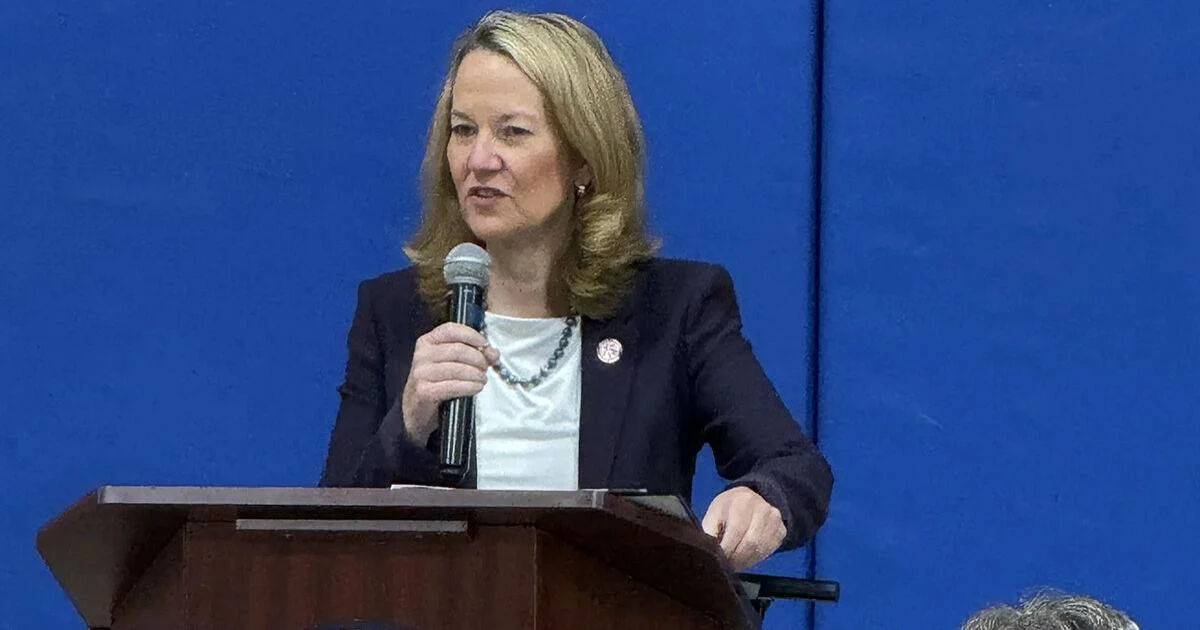
(The Center Square) – Four years after skating through her first election by 280 votes, Arizona Attorney General Kris Mayes’ reelection bid cruised by a much larger margin of 281,586.
The former journalist at the Phoenix Gazette and Arizona Republic and two-term member of the Arizona Corporation Commission was among the Democrats who won in an Arizona election that resulted in the party’s first trifecta in 60 years. Mayes routed Senate President Warren Peterson, R-Gilbert, by 11%.
Now Mayes’ attention has shifted forward, with an eye toward fighting against industrial overreach, such as the state’s ever-growing list of data centers or corporations that Mayes suspects are engaging in antitrust violations against state residents.
Mayes also called on the state Legislature to bolster its funding mechanisms against Mexican drug cartels, which she believes is key if Democrats are going to stop the flow of drugs through the state’s southern border.
“I hope it’s a stamp of approval from voters, about an attorney general who fights for Arizonans, whether it’s fighting for our water supplies and suing the Saudis in Western Arizona or preventing unnecessary utility rate increases,” Mayes told The Center Square.
“It’s an honor to be the attorney general of this amazing state, and it’s way better to win by 280,000 votes than by 280,” she added.
For her second term, Mayes said she plans on doing whatever she can to help her fellow midterm winners from the Democratic Party, either at the legislative or statewide level, to enact the changes that voters demanded on Election Day.
Mayes said those steps include helping incoming Superintendent of Public Instruction Teresa Leyba Ruiz in her quest to rein in Empowerment Scholarship Account abuse, along with continuing litigation against companies that exploit Arizonans of all ages.
The attorney general cited her office’s role in a multi-state, $17.1 billion antitrust settlement earlier this year with Meta over the company’s addictive features on Instagram and Facebook that exposed children to serious mental harms as an example of the litigation that she’ll keep pursuing.
Mayes said her office will work with the Legislature to allocate the $2.25 million the state received from the Meta lawsuit to bolster school programs across Arizona.
“I want to see a lot of that money go to our public schools for after school activities, counselors and things that keep our kids off of screens, which is what the Meta lawsuit was all about,” Mayes told The Center Square. “It was about the fact that this company, along with TikTok and YouTube, have addicted our teenagers using an algorithm. We’re going to continue to do cases like that.”
The other litigation that Mayes expects to pursue in the next four years involves cases of elder abuse and landlord negligence.
Mayes pointed to her office’s August lawsuit against the owners of Sedona Springs, Sienna Ridge and Summit Ridge – three affiliated apartment complexes in Tucson. The suit said the owners failed to meet the state’s minimal standards of habitability because of nonexistent or malfunctioning air-conditioning systems. Mayes said the lawsuit is an example of what she aims to achieve in future litigation.
“We are going to do cases against big corporations that are harming renters,” she said. “We are going to go after junk fees that are harming renters. We are going to continue to hold landlords accountable for failing to fix their air conditioning systems in the middle of summer.
“That’s a huge and important part of our work at the AG’s office, and we’ve stood up a Housing Justice Unit to do that kind of work,” Mayes added.
This article was originally published by The Center Square and is republished under its open-access guidelines.