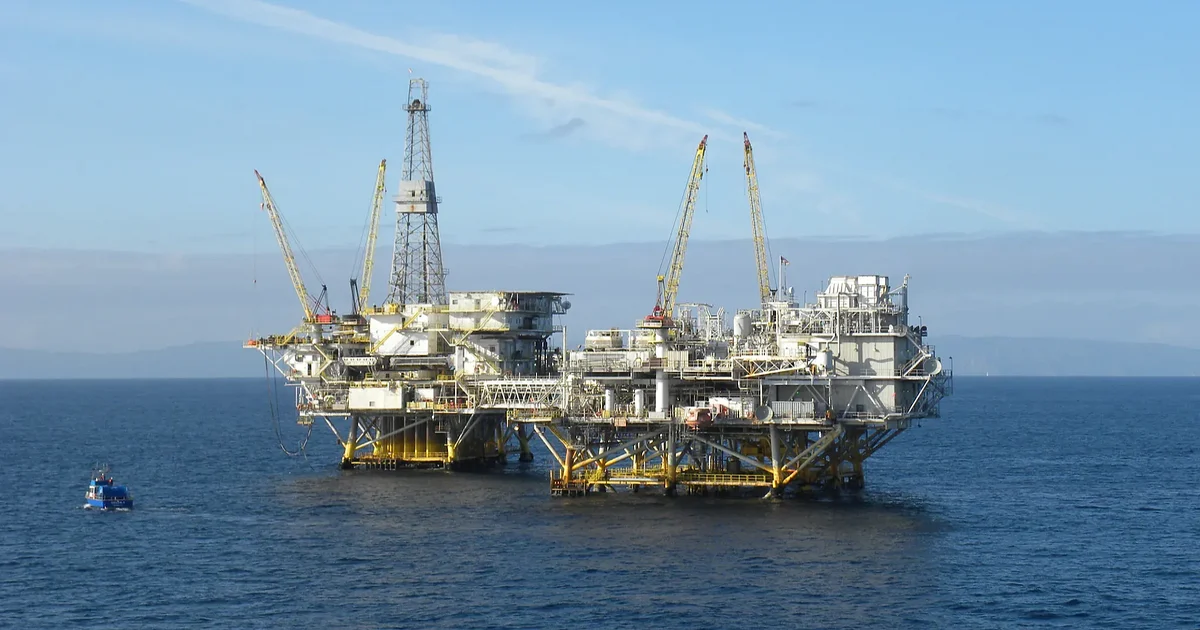
(The Center Square) – Federal regulators on Monday announced a plan that would allow oil and gas companies to leave the underwater sections of about 300 decommissioned offshore drilling platforms to serve as artificial reefs instead of hauling the massive steel structures ashore.
The proposed Federal Outer Continental Shelf Reef-in-Place Program is aimed at expanding marine habitats and boosting saltwater fishing opportunities across federal waters in the Gulf of Mexico and off the coast of California, according to the Marine Minerals Administration.
While offshore energy associations say leaving decommissioned platforms in place saves millions in removal costs while also preserving habitat for sea life, environmental advocacy groups argue this allows oil companies to dodge cleanup bills and shifts long-term liability onto the public.
“Eligible offshore structures can continue to serve our coastal communities as artificial reefs that support marine habitat and expand fishing and recreational opportunities,” Mike Olsen, acting director of the Marine Minerals Administration, said in a statement.
“We want to hear from states, tribes, fishermen, offshore operators and scientists as we develop a federal program that builds on successful state efforts and addresses the unique conditions of the Outer Continental Shelf,” Olsen added.
The agency issued a Request for Information Monday asking for public comment to support implementation of Executive Order 14430, “Restoring American Saltwater Angling and Recreation,” signed by President Donald Trump on Sept. 17.
Erik Milito, president of the National Ocean Industries Association, a trade group representing the offshore oil and gas industry, said in a statement that the program “establishes a clear pathway to protect valuable habitat for fisheries and coastal communities.”
Under federal law, offshore operators must remove platforms and plug wells once production ends, and towing them ashore often costs tens of millions of dollars per rig.
Eric Smith, associate director of the Tulane Energy Institute in New Orleans, told The Center Square that toppling a rig involves removing the upper deck and cutting the legs of the platforms 85 feet below the surface to secure safe passage of the largest ships before pushing the structure to the seafloor. Smith said it has been done hundreds of times in the Gulf.
More than 600 decommissioned oil and gas platforms in the Gulf have already been converted into artificial reefs through existing state-federal partnerships, mostly in federal waters within state-managed reef zones, as verified by The Center Square through Bureau of Safety and Environmental Enforcement records.
Louisiana leads the region with more than 350 reefed structures, followed by Texas with more than 140, along with smaller numbers off the coasts of Alabama, Mississippi and Florida, bureau data shows.
Of the 1,394 offshore structures remaining in the Gulf as of June 2024, 273 currently have decommissioning applications submitted to federal regulators, with only 77 slated for donation to a state Rigs-to-Reefs program, agency data shows.
“You kill more of the sea life if you pick up the thing and remove it than if you leave it in place,” said Tulane’s Smith. “That actually helps the sea life.”
Smith studied how to best decommission California’s offshore platforms for the former U.S. Minerals Management Service about 20 years ago while at offshore engineering firm McDermott, which installed most of the structures. He said almost all of the mussels eaten within the state come off platform legs that would be destroyed by full removal.
Fully removing the 23 oil and gas platforms in federal waters off the California coast would cost more than $1.6 billion, according to Bureau of Safety and Environmental Enforcement estimates. California legislators passed a rig-to-reef law in 2010, but no platforms have been repurposed there.
Alabama, Louisiana, Mississippi, Texas and Florida have operated Rigs-to-Reefs programs for decades, with state agencies taking ownership and assuming liability, while making the structures accessible to commercial and recreational anglers. This saved oil companies the costs of removal, half of which they typically donate to the reef programs.
An upcoming notice in the Federal Register, to be published soon, will seek input on program eligibility, environmental safeguards, navigation safety, national security, permitting, and long-term liability, while excluding offshore wind structures, according to the Marine Minerals Administration.
This article was originally published by The Center Square and is republished under its open-access guidelines.