The Rightist

News, Conservative opinion, and a good-natured jab at the left.

News

Straight conservative news and reporting.

  • Homan says investigators have ‘strong case’ against Ilhan Omar

    Homan says investigators have ‘strong case’ against Ilhan Omar

    (The Center Square) – White House border czar Tom Homan said over the weekend that federal investigators have a “strong case” against U.S. Rep. Ilhan Omar.

    These comments come less than a week after Homeland Security Investigations searched the Minnesota Democrat’s Washington, D.C., home. Reports have linked the search to an investigation into the circumstances surrounding her naturalization as a U.S. citizen.

    In an interview on Saturday, Homan addressed whether Omar could face legal consequences.

    “I’m not going to get ahead of the bureau,” Homan said. “We will let the evidence lead where it leads. But she will be held to the same standards you and I are held. If she violated law, then she will be held accountable.”

    When asked what the investigation is examining and whether it extends beyond potential immigration fraud, Homan said he “knows things” but directed the question to the FBI.

    The FBI did not respond to a request for comment from The Center Square.

    Over the weekend, former President Barack Obama joined the many Democrats and civil rights groups condemning the raid.

    “It is a basic principle of American democracy that the government can’t selectively target individuals simply because of their political beliefs or what they say,” Obama said in a social media post on Sunday. “But that’s exactly what the Trump Administration is doing to Congresswoman Ilhan Omar of Minnesota.”

    The Democrat called claims regarding Omar’s immigration status “unsubstantiated,” also stating that this investigation is because the Trump administration is “actively trying to deport” Omar.

    “The full weight of the federal government is being brought down on a law-abiding elected official because she has dared to criticize the president,” Obama said. “The fact that any president, or any administration, is willing to engage in such transparent efforts to intimidate someone should outrage all Americans.”

    Federal officials searched Omar’s home early Monday morning, according to a statement the U.S. Department of Justice provided The Center Square.

    “Homeland Security Investigations executed a judicially authorized search warrant secured by the Department of Justice,” said a spokesperson. “This enforcement action is part of an ongoing federal criminal investigation.”

    That same spokesperson declined to comment further on “investigations.”

    Attorneys for Omar have demanded that items—including her phone—taken during the raid be returned to the congresswoman, stating its seizure was “neither justified nor lawful,” according to reports. Members of her family are among more than a dozen people who have been subpoenaed by a grand jury.

    The raid came just a month after Homan confirmed that Omar is actively under investigation by DHS.

    Omar, who immigrated to the United States in 1995, has faced scrutiny for years over the circumstances surrounding her naturalization as a citizen.

    In September, Homan refused to reveal many details regarding the “ongoing criminal investigation,” besides that U.S. Immigration and Customs Enforcement are the ones conducting it.

    Since the raid, other federal officials have joined Homan in confirming the case is “strong,” adding that this is not a politically-motivated prosecution.

    “We try to let the law follow the facts, rather than creating facts just to prosecute people we don’t like,” Vance said last week. “I do know there are some serious allegations against Ilhan Omar . . . If there’s a real case there, we’re going to follow the facts.”

    The scrutiny includes longstanding allegations that Omar married her brother to facilitate immigration fraud. Omar denied the allegations in 2016, calling them “disgusting lies.”

    In December, Omar called an effort to examine records pertaining to her immigration “sick.”

    “I have no response because I don’t know what they’ll be investigating,” Omar told a reporter. She added that investigators would “absolutely not” find anything.

    According to federal officials, the investigation has been ongoing for some months.

    DHS Secretary Markwayne Mullin also discussed the issue in September, alleging that they’ve already determined that she married her brother.

    “Something’s going to happen,” Mullin said. “We know that she married her brother to try to bring him to the United States. We know he now lives in London.”

    Mullin also threw out the prospect of deportation, which would first require denaturalization.

    “There may be more to this, the whole family migration and possibly some illegal activity for them to come to the United States to begin with,” Mullin said. “If we can prove it, that you shouldn’t have been here in the first place, we will deport you.”

    Omar, who represents Minnesota’s 5th Congressional District, has served in Congress since 2019. She addressed the investigation last week.

    “Thank you to everyone who stood with me over the years,” Omar said in a post on her personal social media. “It’s been a scary journey but I have always been grounded in my work and ability to provide exemplary service to my constituents.”

    Omar added that she has felt targeted.

    “Trump and his administration have been after me since I arrived in Congress,” she said. “I have always stood up to him and that will never change. The pedophile protector will never silence me.”

    This article was originally published by The Center Square and is republished under its open-access guidelines.

  • Fed minutes show most officials expected another rate increase by year-end

    Fed minutes show most officials expected another rate increase by year-end

    The Federal Reserve on Wednesday, Oct. 7, released the minutes of the Federal Open Market Committee’s Sept. 15-16 meeting, at which the committee raised the target range for the federal funds rate by a quarter percentage point to 3.75 percent to 4 percent. The minutes state that most participants assessed that “another increase in the target range for the federal funds rate would likely be appropriate by year end,” while adding that future decisions would depend on incoming data.

    The vote was 12-0, with Chair Kevin Warsh and the other voting members, including John C. Williams, Michael S. Barr, Michelle W. Bowman, Lisa D. Cook, Beth M. Hammack, Philip N. Jefferson, Neel Kashkari, Lorie K. Logan, Anna Paulson, Jerome H. Powell and Christopher J. Waller, all in favor. According to the minutes, all participants supported the increase, and several said they viewed the current policy rate as “not restrictive or only mildly restrictive.”

    On inflation, participants said it “remained elevated” and that they had “not seen sufficient progress on lowering inflation in recent months.” They generally assessed the risks to inflation as skewed to the upside. On employment, participants judged the labor market to be stable and close to maximum employment, with risks broadly balanced. Participants described economic activity as expanding at a solid pace, supported by business investment tied to artificial intelligence and by consumer spending, though several noted strains on low- and moderate-income households from higher energy prices.

    In its Sept. 16 post-meeting statement, the committee said “inflation remains elevated” and that the rate increase “will support a timelier return to the Committee’s 2 percent goal.” The Board of Governors also raised the interest rate paid on reserve balances to 3.90 percent and the primary credit rate to 4.0 percent, effective Sept. 17. The move was the committee’s first rate increase since 2023.

    The committee’s next scheduled meeting is Oct. 27-28.

    Source: Federal Reserve, Minutes of the Federal Open Market Committee, September 15-16, 2026; release announcement.

  • Supreme Court opens term with climate liability and veterans’ benefits cases

    Supreme Court opens term with climate liability and veterans’ benefits cases

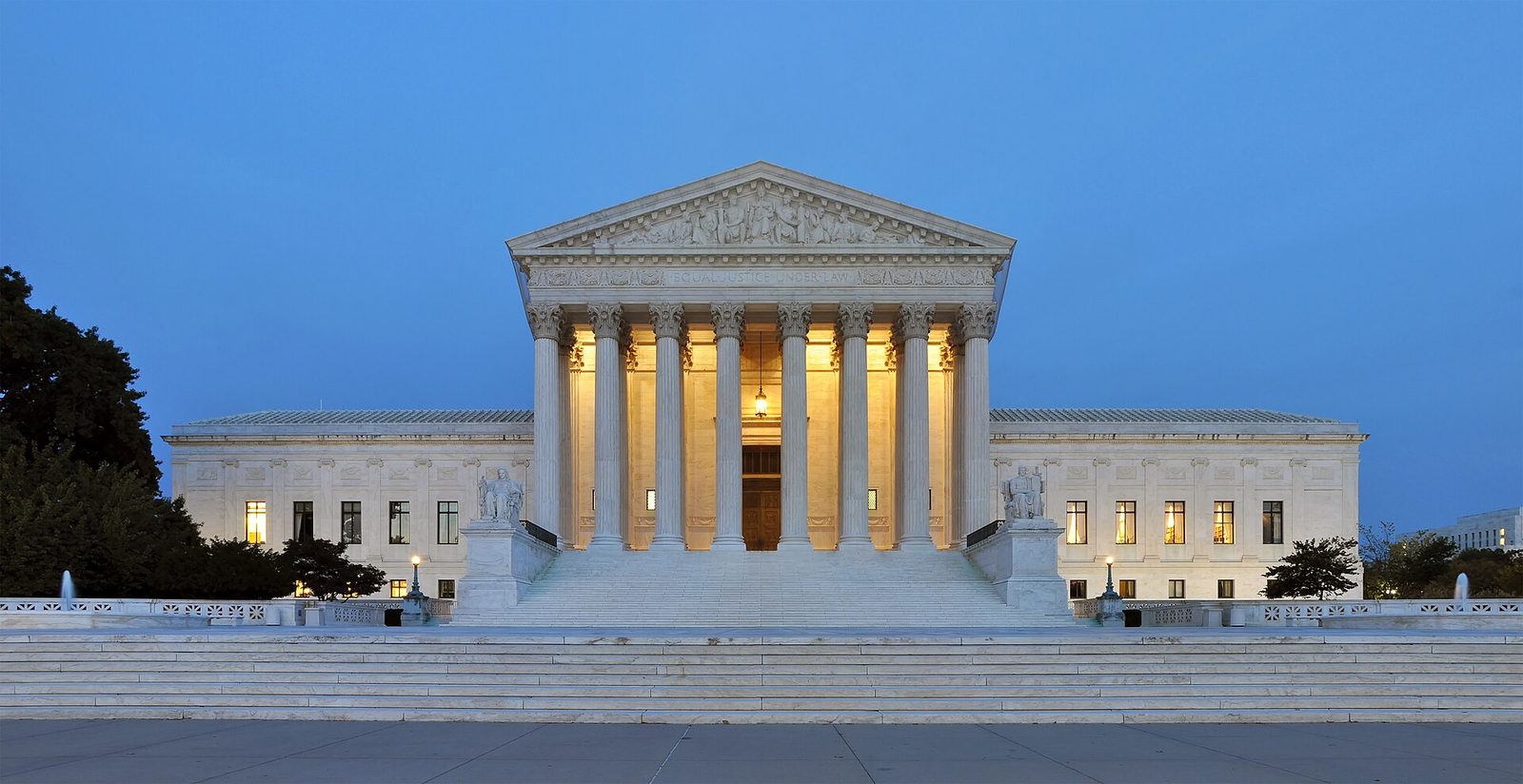
    The Supreme Court began its October Term 2026 on Oct. 5, hearing argument in two cases and releasing an order list disposing of petitions that accumulated over the summer recess. The court’s October hearing list shows the first argument session running through Oct. 14.

    The first case argued, Suncor Energy (U.S.A.) Inc. v. County Commissioners of Boulder County, asks whether a lawsuit filed in Colorado state court seeking to hold energy companies liable for their alleged role in climate change may proceed, or whether federal law bars such claims. Justice Samuel Alito is not participating in the case, according to SCOTUSblog. The second case, Johnson v. United States Congress, asks whether a federal district court may hear a constitutional challenge to a law that limits disability benefits for certain incarcerated veterans.

    The court’s Oct. 5 order list included denials of review in petitions considered at the justices’ late-September conference, as well as several orders granting review, vacating lower-court judgments and remanding for reconsideration. Among them, the court sent Garcia v. Hobbs and Trevino v. Hobbs back to the U.S. Court of Appeals for the Ninth Circuit for further consideration in light of its decision in Louisiana v. Callais, and remanded Mullin v. National TPS Alliance to the same court.

    On Oct. 1, the court granted review in three additional cases, SCOTUSblog reported: a challenge to the administration’s policy of detaining noncitizens apprehended inside the United States without bond hearings, a dispute over enforcement of zoning ordinances against religious institutions, and a case concerning a federal law protecting former spouses of service members. Those cases are expected to be argued in early 2027. The court has also scheduled a Dec. 9 argument on removals of noncitizens to third countries.

    Sources: Supreme Court order list, Oct. 5, 2026; October 2026 hearing list; SCOTUSblog.

  • How the Federal Budget Process Works—and Why Congress Keeps Hitting Deadlines

    How the Federal Budget Process Works—and Why Congress Keeps Hitting Deadlines

    The basic steps

    Funding the federal government follows a yearly cycle set largely by the Congressional Budget Act. It begins when the President submits a budget request to Congress, laying out the administration’s spending priorities. The White House released its request for fiscal year 2027 on April 3, 2026, according to the National Association of Counties. The request is a proposal, not law—Congress controls the purse.

    Congress then writes 12 annual appropriations bills that divide discretionary spending among federal agencies. The House is supposed to pass its bills by June 30, and all funding is meant to be enacted before the fiscal year begins on October 1. In practice, that deadline is frequently missed.

    What happens when bills aren’t done

    When Congress cannot finish on time, it has two options. It can pass a continuing resolution, or CR—a stopgap that temporarily funds agencies, usually at the prior year’s levels, until a set expiration date. Or, if no funding measure passes at all, affected agencies must shut down, furloughing many federal workers until Congress acts. A CR keeps the lights on but freezes spending in place, while a lapse triggers a shutdown.

    A recent, costly example

    The most recent fiscal year shows the process under strain. The government shut down on October 1, 2025, after Congress failed to enact fiscal 2026 funding, and remained closed for 43 days before reopening on November 12, according to the Congressional Research Service. The package that ended it provided full-year funding for three of the 12 appropriations bills and extended the rest at prior-year levels. The Congressional Budget Office estimated the shutdown reduced real GDP by about $11 billion and delayed roughly $54 billion in federal spending.

    Where things stand now

    With the fiscal 2027 cycle now underway, Congress faces the same calendar pressures it has navigated for years. Tracking tools maintained by the Library of Congress and groups such as the Committee for a Responsible Federal Budget publish real-time status tables showing which of the 12 bills have passed each chamber—a useful resource for readers who want to follow the process themselves.

    Sources